Washington NASA Space Grant Consortium

Pierce College High Altitude Balloon Summer Camp

Pierce College High Altitude Balloon Summer Camp

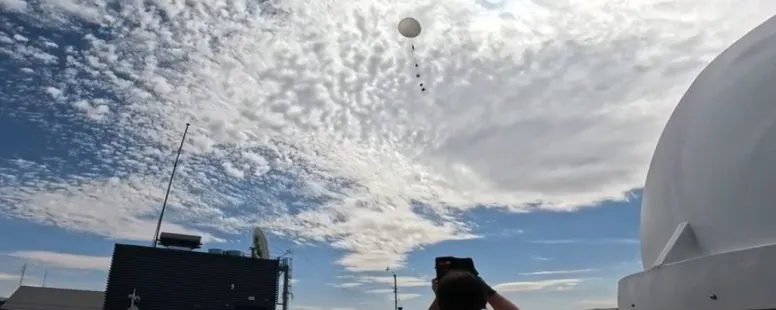
The Pierce College Science Dome is leading the pack in getting high school students introduced and involved in STEM. Over the summer, the Science Dome hosted a High Altitude Balloon (HAB) Summer Program for high school students to gain hands-on experience experimenting, coding, and launching a HAB. During this experiential learning opportunity, students were  coached by STEM college mentors and Professor in Physics and Astronomy Dr. Hillary Stephens. High altitude balloons are used for monitoring and testing weather in the upper atmosphere, typically reaching a height of 100,000 feet in the stratosphere! Students were formed into teams, where they created their own team name, mission patch, and crafted different payloads for the balloon. All teams were set to test different conditions when the balloon was launched. Each team’s experience encapsulated the critical steps in design, build, test, evaluate, and failure analysis demonstrating their learning through the engineering design process framework.

Voyager 2.5

The first payload, located closest to the balloon, was created by the Voyager 2.5 student team. Due to the placement of the payload, their goals were to measure the behavior of the balloon by installing a camera pointed upwards. By doing so, they were able to study how the balloon fluctuates and what factors may have affected it. They coded onboard instruments to record pressure and temperature changes in the atmosphere as well as the apogee (highest reached point) of the balloon. They found that the main behavior changes were caused by temperature and altitude differences between the troposphere, tropopause, and stratosphere. 

Radical Rads

The middle payload was created by the Radical Rads student team. Their mission objective was set to assess how radiation is impacted by altitude and earth’s magnetic field; the team incorporated multiple sensors in their payload testing Alpha, Gamma, and Beta particles as well as UV and magnetic field sensors to record their findings. Although their preliminary testing was thorough, when it came to launch, their SD card (which recorded all data from the sensors) disconnected ultimately leaving them with a data loss from the launch. However, data loss does not mean this team did not gain valuable information. Through this experience, they now know to increase the security of their SD card and ensure all wiring is fully intact to record data accurately in the future.

Mothmen

The Mothmen student team developed the third payload. Due to the placement, located at the bottom, their goal was to record a top-down video of the earth, as well as measuring temperature, altitude, pressure, and recording sounds that could be picked up on the way. The team successfully crafted their payload, utilizing aerogel to capture particles from high up in the atmosphere. Their plan was to have the lid containing the aerogel open at 70,000 feet, and once the balloon began its descent, it would close the lid containing the particles for later testing. However due to a minor error in their programming – the measurements were confused between feet and meters, not quite recording what they hoped. Despite this, the team gathered tremendous data on pressure and altitude, a beautiful view of the earth, and even captured what could be alien sounds on the recording!

The Descent

Once the balloon reached its apogee, it began its descent down to a remote part of Washington State. All teams travelled over 3 hours to retrieve the balloon, and after resting from the long trip, created presentations on their findings. Through this whole program, students were able to experience failure analysis through experiments, develop graphic designing skills of their team badges, and most importantly – had fun throughout the entire program. The students learned many technical competencies related to launching a High-Altitude Balloon, as well as teamwork and professional development skills to take with them in their future careers. 

The Washington NASA Space Grant Consortium is composed of multiple institutions, industries, and organizations all working to provide experiential learning and professional guidance to strengthen interest in the STEM field. Pierce College was awarded funding through WA Space Grant to implement this program. We are lucky to have such a strong community in Washington state that has a shared passion in creating opportunities for authentic STEM engagement and learning. 

Program Contact: Dr. Hillary Stephens
Written by Alexandra Walters
Program Alumni: Dr. Biswajit (Bish) Paul

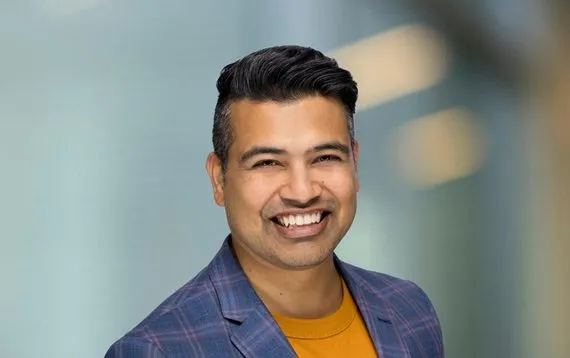
Dr. Biswajit (Bish) Paul

From Surviving to Thriving

Being a first-generation immigrant college student in the greater Seattle area comes with its challenges. By sharing his story, Bish hopes to cultivate a sense of belonging for students who are in a similar position as he once was. 

Dr. Biswajit (Bish) Paul currently serves as the Policy, Advocacy & Communications lead for Washington State at the Gates Foundation. Dr. Paul, serving in a critical role that bridges science, education, and policy, holds many intersectional identities that impacted how he grew up and his career path. Being queer, a person of color, a first-generation college student, and from a low-income immigrant household, Bish has dedicated his career to make systemic changes that alleviates the path into STEM careers and economic mobility. 

Background

Dr. Bish Paul attended the University of Washington for undergrad in 2003 and then returned in 2011 to achieve his Doctor of Philosophy in Cell/Cellular and Molecular Biology. During his time in undergrad, Bish was selected for the Washington NASA Space Grant Consortium competitive Summer Undergraduate Research Program (SURP) in the summer of 2006. This opportunity was able to kickstart Bish’s research career by helping him gain his initial publication, build upon his academic portfolio, and strengthen his professional network by solidifying his reputation in research. After this experience, Bish was able to get involved in additional research opportunities and pursue various projects ultimately expanding his expertise and skillset. 

Dr. Bish Paul shared a memorable anecdote that highlighted how much he had to learn after high school. On his very first day at the University of Washington, in a country that was entirely new to him, he unknowingly walked across eight lanes of interstate traffic just to make it to class on time. At the time, he didn’t realize how dangerous this was, being unfamiliar with freeways. This experience was just one of many eye-opening moments that marked the beginning of his undergraduate journey and personal growth.

During his scientific career, Bish’s accomplishments and discoveries were sometimes downplayed or not attributed to his hard work. Some peers questioned his research results or dismissed accomplishments, incorrectly assuming he was a diversity hire and did not earn his place fairly.  Comments like these added to his imposter syndrome; he often felt out of place in and out of research and the classroom. There were few spaces where he felt welcomed, accepted, and supported.

This led Bish to become a student leader with Hutch United, a community of underrepresented and self-identified minority scientists at the Fred Hutchinson Cancer Center. This group brought together a circle of students that supported him as his community, and that he relied on during the various challenges that come with pursuing a PhD. When asked if he could give advice to students who are in a position similar to his, he said “If the space is not built for you, make the space yours. Surround yourself with people who can relate to your experiences and find strength within each other.” Bish was eventually able to help with the creation of a Hutch United fellowship that raises funds for women, people of color, and international students. Later he realized that this kind of assistance, while necessary, was not sustainable unless supported by system changes and that he needed to take the next step up to start changing laws, ensuring longer term impact. 

From Academic Research to Policy

Two things that motivate Bish when navigating his career are curiosity and discovery. From his previous academic research experience, he moved to become a Policy Analyst for the California State Legislature through the California Council on Science and Technology. During his first year, he was able to work on 18 different bills, one impacting over 40,000 people in the state of California. This experience affirmed his decision to move to a career in policy and systems change. He moved back to Washington and took on reforming policies in STEM education, many of which include funding and access. Washington, like other states, has a large gap in access for women and people of color, leading to less representation in research and industry.  

“You need people from every background in a research lab, in order to accomplish research made for everyone. Diversity is absolutely necessary in science. It is your superpower!” 

In his current role, Bish is making large-scale changes to increase access for education across Washington state; one project he described is the expansion of the College in High School initiative. This program increases access to college courses for all, including to lower income communities and young people from rural areas, bringing the college courses directly to high school classrooms. With a recent policy change no fees are associated with the program, and students are able to earn college credits while in high school. Over just one year of the policy change, 32,000 students were able to take advantage of this in different high schools across the state saving them tuition and time. Overall, what he finds most fulfilling about his current role is leaving his work and immediate surroundings better every day.

During our conversation Bish reflected that his background in science and intersectionality of identities greatly informs the system level changes that society needs. Dr. Bish Paul’s story and experiences are what guided him to making changes statewide, increasing STEM access for students across the board. He started his journey never thinking he could one day be in this position; but he is now able to pay it forward by taking a chance and investing in students the way that he was invested in. 

By sharing stories like Bish’s, we hope to foster community through experience and reduce the feeling of imposter syndrome in STEM spaces. Everyone should feel that they belong and are welcomed on the path they are headed. STEM is meant for everyone and should be open to all who wish to pursue it. 

Flora and Nova: The Story Behind the WASG Mascots

Flora & Nova
Flora & Nova

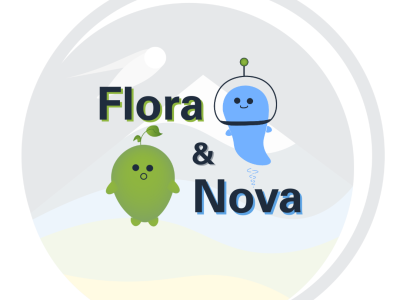
The Washington NASA Space Grant Consortium has evolved in many ways since first starting in 1989. In 2024, the organization went through an entire rebrand – which in our opinion – better represents the state consortium as a whole. This rebrand, which you can learn more about here, includes changing the logo to be inclusive of our mission, the history of our program, and the entire state of Washington. Along with this change is the addition of program mascots; Flora (she/her) and Nova (they/them), equally as crucial to our mission and bring a cheerful flair that enlightens our program. 

Nova

Inspiration and curiosity are the best words to describe Nova. They are the pinnacle of our support for aerospace discoveries and spaceflight. Washington Space Grant, being a NASA awardee and partner, shares the drive to encourage the next generation of space explorers. They are our collective celestial guide to the cosmos – exploring the moon, mars, asteroids, comets, and the unknown! 

Flora

Washington Space Grant is often known for the discoveries and evolution of space exploration. Flora reminds us that discoveries and evolution are also prominent on earth. Washington Space Grant empowers this through our robust support in the various STEM fields. Flora is our representative of avid exploration of the biological and life sciences, crucial to all of our studies. 

The key to unlocking the secrets of the universe, or in our case the key to supporting and inspiring the next generation of STEM students, is collaboration. Washington Space Grant thoughtfully chose to pair these mascots together; it represents the shared aspirations of all of us in Washington State. Our goal to support students in STEM cannot be reached unless we all work together to achieve it. Only together can we reach the stars!

Flora and Nova designs and artwork created by: Kavitha Krishnan
WASG rebranded logo created by: Kavitha Krishnan 
Written by: Alexandra Walters